

Why France fell and Britain kept fighting
1940–1941
A German breakthrough cut off large Allied forces in northern France. Evacuation at Dunkirk saved soldiers but could not prevent France’s defeat. Britain kept fighting: its air defence frustrated Germany’s preparations for invasion while cities faced bombing.
In spring 1940, Germany invaded Denmark and Norway. On 10 May, it attacked France and the Low Countries. France’s defences included fortifications on its German border. German forces also advanced through Belgium, the Netherlands and Luxembourg, and armoured units broke through the Ardennes, which the Allies had considered difficult terrain for tanks.
Sources, licences and acknowledgements
U.S. Government · NARA 195566 · Original · Public domain (US government work)

Archival digital photograph resized and compressed without additional cropping.
The rapid advance to the English Channel cut off Allied forces in Belgium and northern France. This encirclement explains Dunkirk: the harbour and surrounding beaches became an escape route for troops who could no longer retreat south. France’s defence had not collapsed because of an attack on Paris itself.
Operation Dynamo began on 26 May and eventually carried off more than a third of a million British, French and other Allied troops. It saved substantial manpower but left lost equipment, dead soldiers and prisoners behind. A successful evacuation was not a victory in the campaign.
Italy under Benito Mussolini entered the war against France and Britain on 10 June. France signed an armistice with Germany on 22 June. The north, including Paris, was occupied; the administration of the unoccupied south was based at Vichy. France’s story did not end in defeat: Charles de Gaulle offers one route into the continuing resistance.
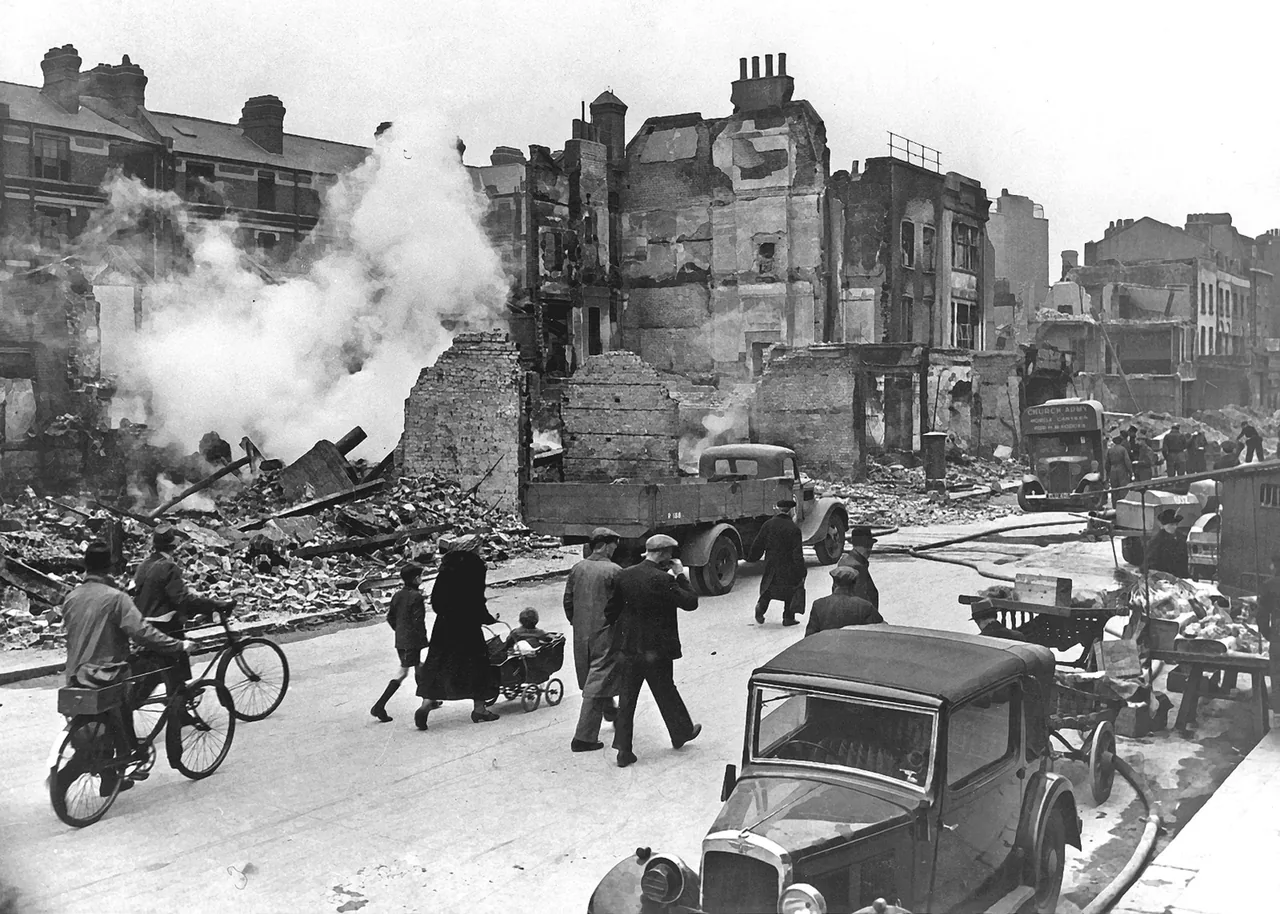
In Britain, Winston Churchill became head of a coalition government in May. The country continued fighting after the French armistice. Germany needed air superiority to prepare an invasion across the sea. The Battle of Britain therefore involved attacks on air bases and other military targets, and the defence against them.
Radar and ground observers helped detect approaching aircraft and direct British fighters against them. Germany failed to gain air superiority and postponed the invasion. Preventing invasion could not protect every civilian, however. London and other cities continued to face the raids known as the Blitz.
Germany had defeated a major European power in 1940 but had not forced Britain out of the war. Defeat in western Europe and continued British resistance became the starting point for the conflict’s further expansion. Supplies, industry and new allies would matter alongside the speed of military breakthroughs.
Places
- Dunkirk: an army escapes a lost campaign
The evacuation of Allied troops after the German advance.
- Paris: occupation, persecution and liberation
The city under German occupation administration.
- London: air defence and life through the Blitz
Air defence and bombing in Britain.
The year 1941 changed both the scale of the war and the alliances fighting it.