

Charles de Gaulle
Free France and the restoration of state authority
Wartime leader; head of the provisional government 1944–1946
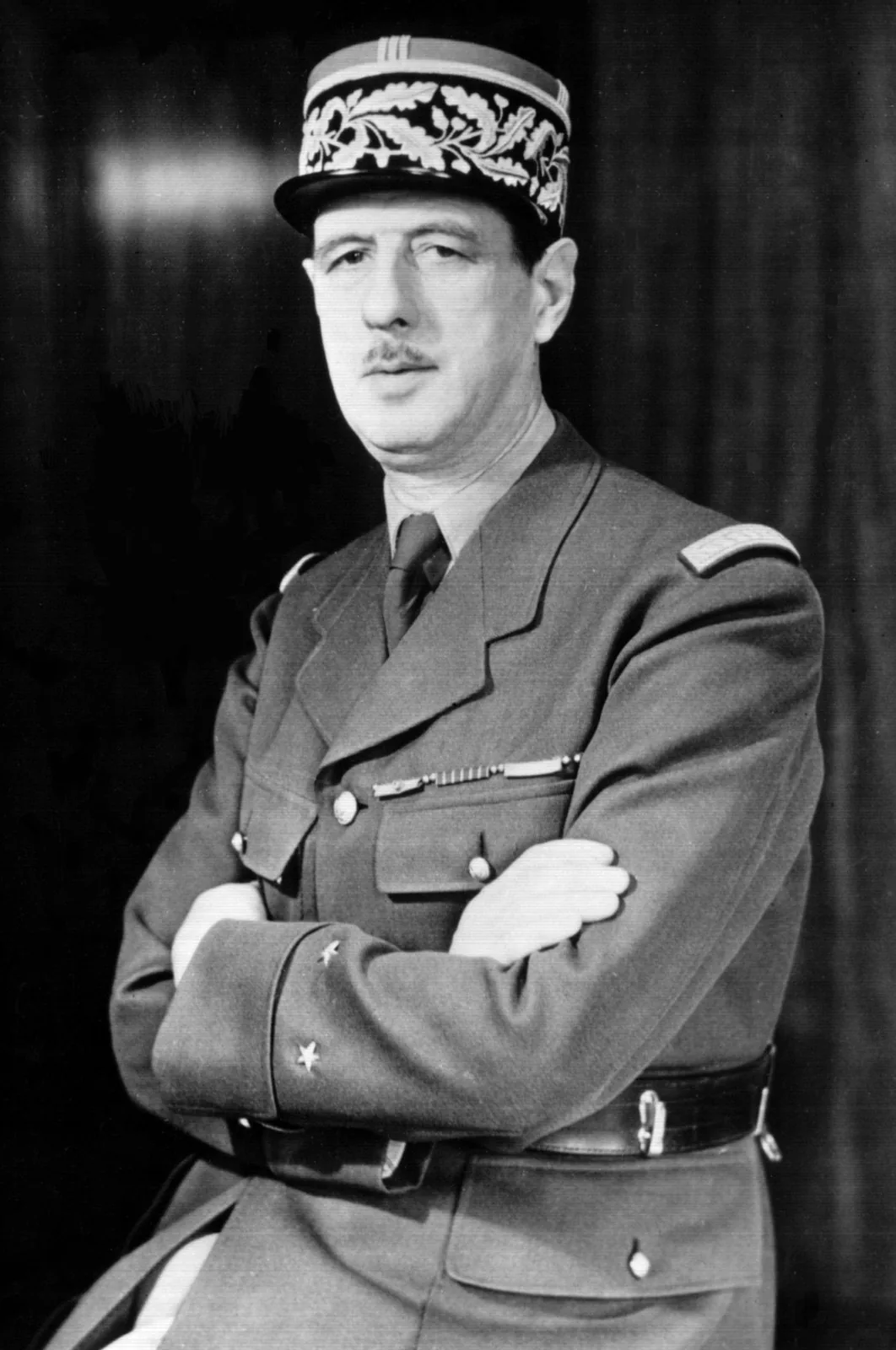
Charles de Gaulle refused to accept France’s defeat as the end of its participation in the war. From Britain in June 1940 he called for the fight to continue and led Free France. He headed the provisional government from 1944 to 1946, connecting military resistance with the restoration of French state authority.
Sources, licences and acknowledgements
Office of War Information, Overseas Picture Division · Library of Congress, cph.3b42159 · ořez / crop: Emiya1980 · Original · Public domain (US government work)

Commons crop, resized and compressed without further cropping.
An officer before defeat
De Gaulle was wounded and taken prisoner by Germany during the First World War. Between the wars he advocated mobile armoured divisions. During the German invasion in May 1940 he commanded an armoured division himself.
Rejecting the armistice
After the French government chose an armistice, he went to Britain. His Appeal of 18 June urged continued fighting. Free France represented a different response to defeat from Vichy’s collaboration with Germany.
His forces should not automatically be equated with every internal resistance group. Resistance involved different organisations, political movements and local experiences.
From war to provisional government
He headed the provisional government from 1944. The liberation of Paris therefore also concerns who would represent France after occupation.
He left government in 1946, returning to power as the Fifth Republic was established in 1958 and serving as its president from 1959 to 1969. His wartime role had a long political aftermath.
Explore further
- Paris
Liberation and the restoration of French state authority.
- Axis and Allies
Continued French participation in the war.