

How the war against Japan ended
1943–September 1945
The Allies progressively broke through Japan’s defensive perimeter and brought the war closer to Japan itself. Fighting continued to devastate people in China and across the Pacific islands. The atomic attacks and Soviet entry into the war preceded Japan’s surrender in August and September 1945.
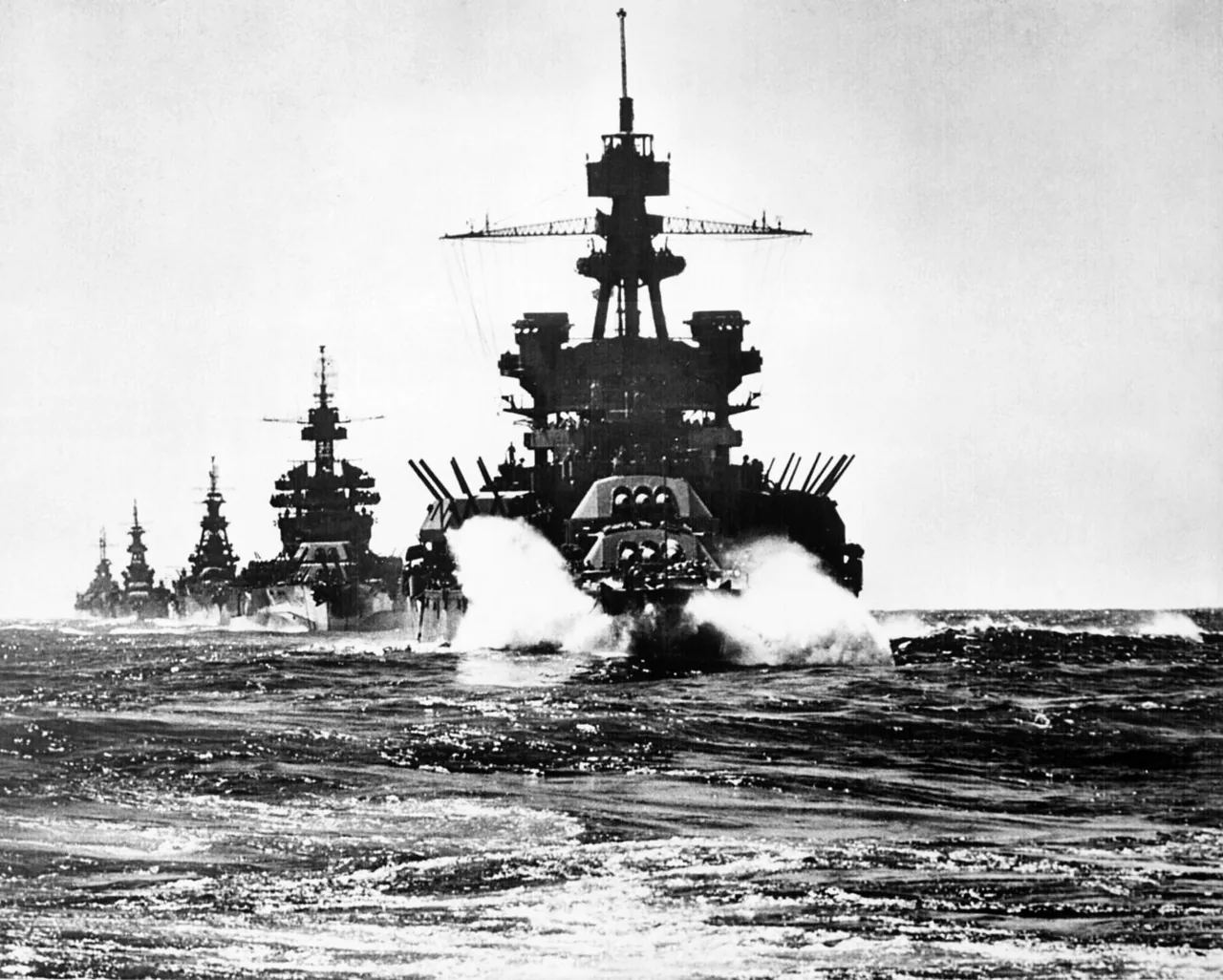
After Guadalcanal, the Allies advanced in the Pacific without directly attacking every base. By capturing surrounding islands, they isolated the Japanese base at Rabaul and broke through the central Pacific perimeter. Captured territory supported further advances, while bypassed bases could no longer operate as before.
Sources, licences and acknowledgements
U.S. Navy, 80-G-59525 · NARA 520627 · Original · Public domain (US government work)

Surviving wartime-censored version, resized and compressed without further alteration.
In 1944, the American advance in the Marianas and victory in the Philippine Sea provided bases for heavy bombing of Japan. In October, American forces landed on Leyte in the Philippines, accompanied by a major Allied naval victory. Japan’s ability to defend its extensive empire was weakening. That did not bring an immediate end to fighting on the Asian mainland or the islands.
China remained a major battlefield. Japan’s 1944 offensive aimed to destroy Chinese forces, secure railway connections and capture Allied airfields. While Japan retreated in parts of the Pacific, it was still gaining ground in China. The war did not move at the same pace or in the same direction everywhere.
American aircraft also devastated Japanese cities with conventional incendiary bombs; a destructive raid struck Tokyo on the night of 9–10 March 1945. American troops landed on Okinawa on 1 April. The island was intended to support a planned invasion of Japan’s main islands. Its inhabitants were caught between the armies, and fighting lasted into June, after Germany’s surrender.
After Roosevelt’s death in April, Harry Truman became US president. During the war, the United States had secretly developed an atomic weapon through the Manhattan Project. It dropped an atomic bomb on Hiroshima on 6 August and on Nagasaki on 9 August. The explosions devastated large areas and brought mass death; radiation’s health effects continued to affect survivors over the long term.
The situation on the mainland also changed. The Soviet declaration of war on Japan was announced on 8 August, taking effect the following day. On 9 August, Soviet forces invaded Japanese-controlled Manchuria. Japan now faced another major opponent in the region where we began following its expansion in 1931.
Emperor Hirohito announced acceptance of the Potsdam Declaration’s terms on 15 August. Japan’s delegation signed the formal surrender on 2 September aboard USS Missouri in Tokyo Bay. The decisions cannot be explained in one sentence: historians debate the influence of the atomic attacks, Soviet entry and possible alternatives. The sequence is documented, while the necessity of using atomic weapons remains contested.
The surrender subjected the emperor’s and government’s authority to the Supreme Commander for the Allied Powers and ordered the release of Allied prisoners and civilian internees. Survivors entered a period of liberation, return and reconstruction. The end of Japan’s empire would also change the future of the countries it had ruled.
Places
- Hiroshima: atomic destruction and a lasting human aftermath
Attack and human consequences.
The fighting’s end opened further questions: return, justice, new borders and new conflicts.